
Automatic vs Quartz Watches Explained: Which One Belongs on Your Wrist?
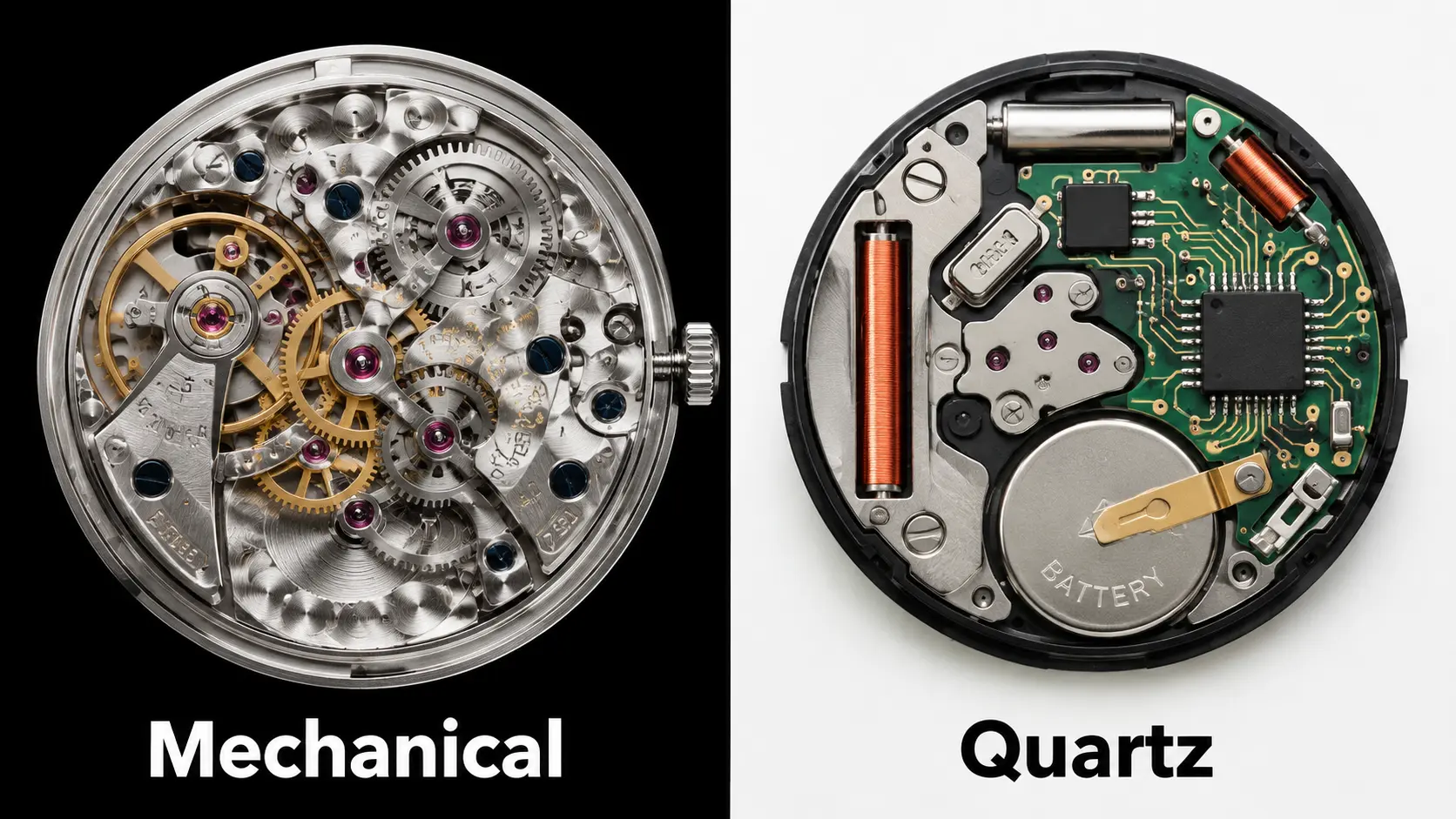
There’s a quiet debate that plays out in every serious watch buyer’s mind before they commit to a timepiece. It doesn’t happen in watch forums or YouTube comments — it happens in that pause before checkout, when you ask yourself: do I actually understand what’s powering this watch?
This guide settles it. No fluff, no brand bias — just the knowledge you need to make the right call.
Automatic watches use mechanical movements powered by wrist motion, while quartz watches use battery-powered quartz crystal technology. Automatic watches offer craftsmanship and heritage, whereas quartz watches provide superior accuracy and low maintenance
What Is an Automatic Watch?
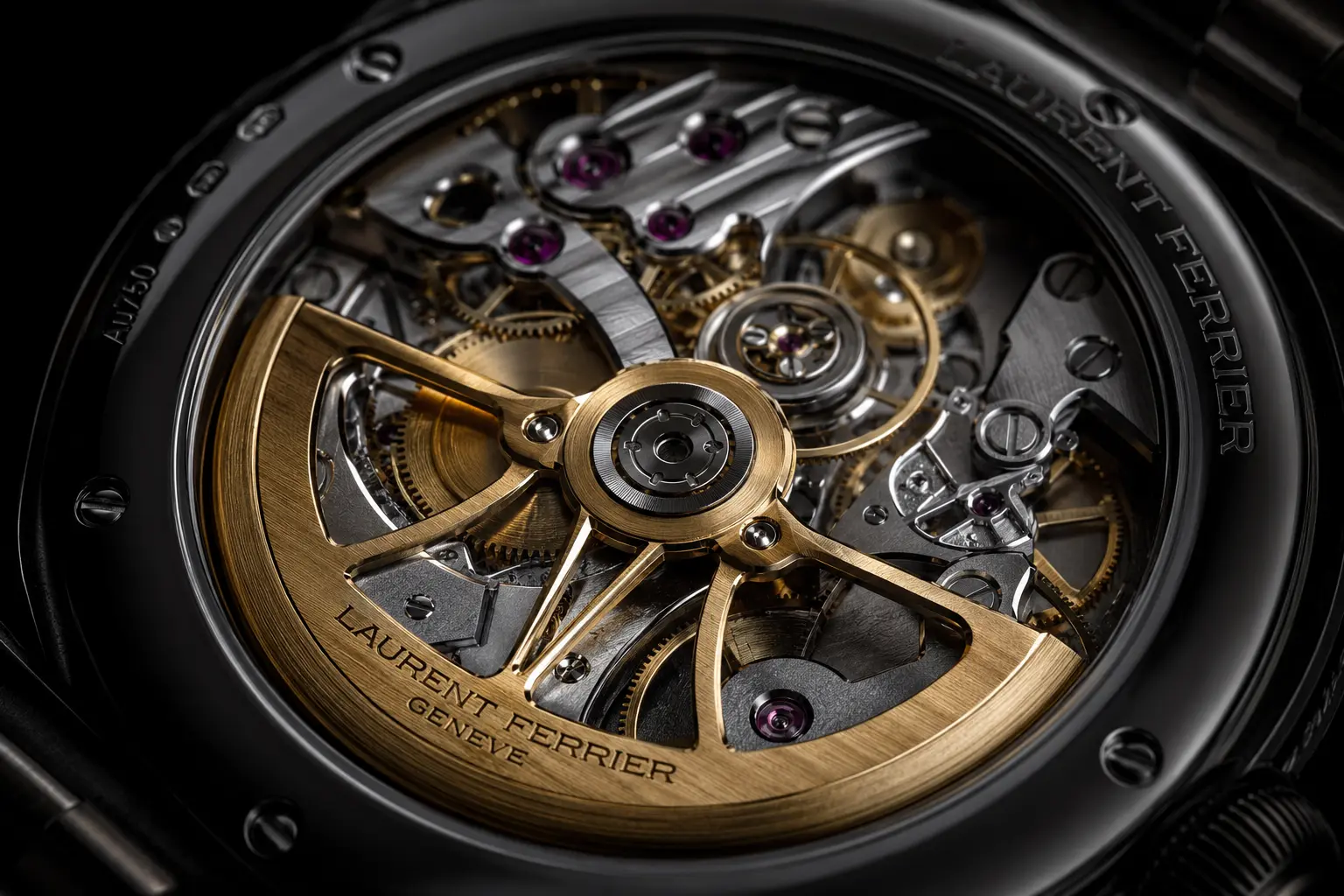
An automatic watch — also called a self-winding mechanical watch — runs on kinetic energy harvested from your wrist movement. Inside lies a rotor, a semicircular weight that spins as you move, winding the mainspring. No battery. No charging. Just physics doing its job.
The movement consists of hundreds of tiny interlocking parts — gears, springs, levers — all working in mechanical harmony. When you hold an automatic watch up to the light and watch the seconds hand sweep continuously across the dial, you’re watching centuries of horological craft in motion.
Key Fact: If unworn for 24–72 hours, most automatics will stop and need manual winding or a watch winder to restart.
What Is a Quartz Watch?
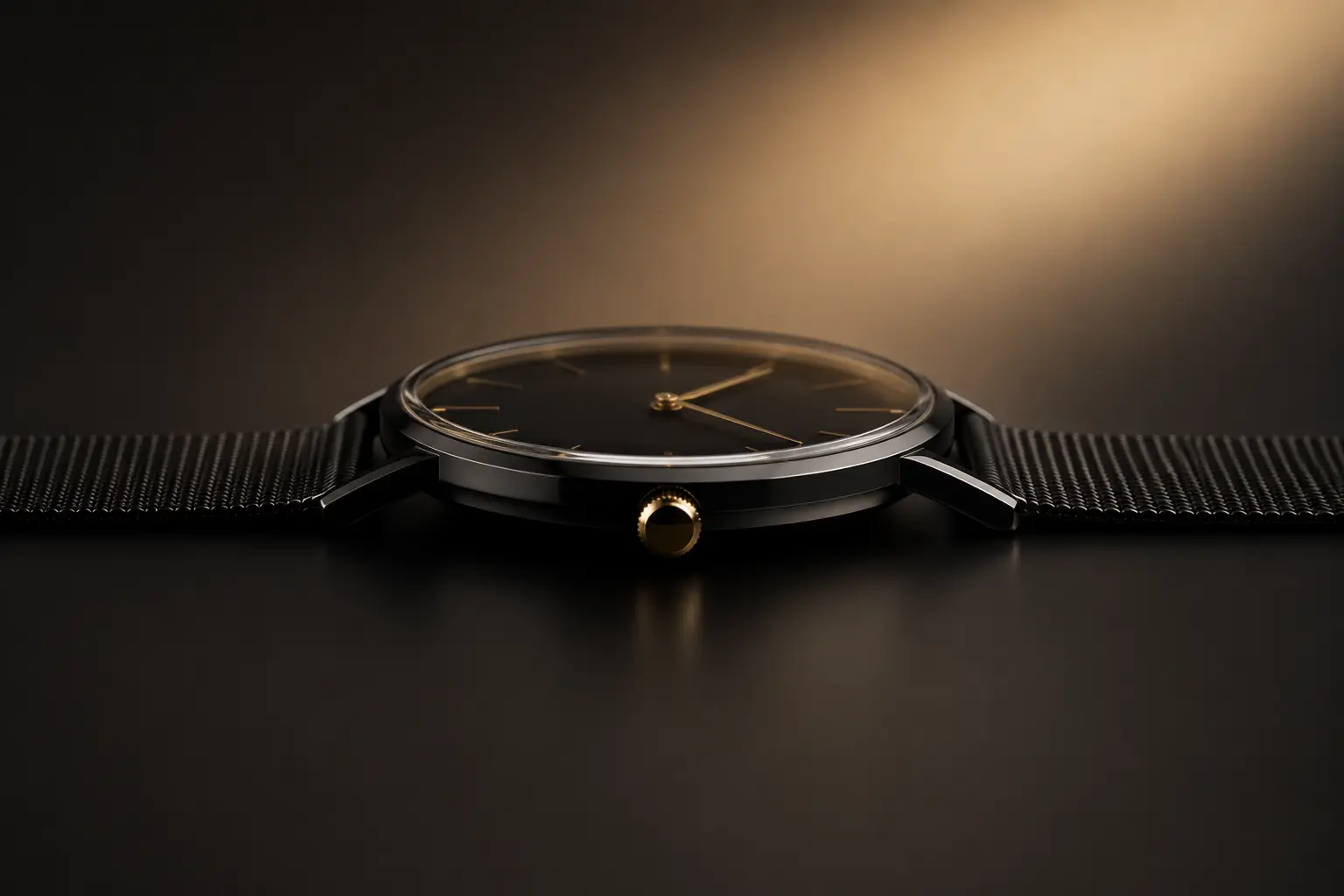
A quartz watch is powered by a battery that sends an electric current through a tiny quartz crystal. The crystal vibrates at exactly 32,768 times per second — a frequency so precise that the watch’s circuit converts it into one electric pulse per second, driving the seconds hand in that familiar tick-tick-tick motion.
Quartz technology was a revolution when Seiko launched it in 1969. It made accurate timekeeping affordable, portable, and nearly effortless.
Key Fact: Most quartz watches need a battery replacement every 1–3 years. Some solar-powered quartz models can last a decade without intervention.
Automatic Watches: Pros & Cons
Pros
- No battery required — powered entirely by motion; a true self-sustaining mechanism
- Craftsmanship & heritage — each movement is a work of mechanical art; often passed down generations
- Continuous sweep — the seconds hand flows smoothly, a visual marker of quality
- Emotional value — there’s a tactile, human connection to a watch that runs on your energy
- Collector appeal — mechanical watches hold and often appreciate in value over time
- Exhibition casebacks — many automatics allow you to see the movement through a sapphire caseback
Cons
- Less accurate — typically ±10–25 seconds per day variance vs quartz’s near-perfect precision
- Higher price point — quality movements require precision engineering and skilled assembly
- Maintenance required — servicing every 3–5 years recommended; costs can be significant
- Stops when unworn — needs wear or a winder to keep running
- Heavier & thicker — mechanical movements take up more space in the case
Quartz Watches: Pros & Cons
Pros
- Exceptional accuracy — typically ±15 seconds per month; some high-end quartz achieve ±10 seconds per year
- Low maintenance — battery replacement every 1–3 years is all it needs
- Affordable — the same precision at a fraction of the cost of mechanical
- Lightweight & slim — quartz movements are compact, enabling thinner case designs
- Durable for everyday wear — less sensitive to shocks, magnetism, and positioning errors
- Always running — no need to wind or wear daily
Cons
- Battery dependency — running out at the wrong moment is a real inconvenience
- Tick movement — the seconds hand jumps discretely rather than sweeping (though some find this elegant)
- Lower collectible value — quartz watches rarely appreciate; the battery inside undercuts the romance
- Less craft narrative — the movement is a circuit board, not a conversation starter
- Environmental footprint — regular battery disposal adds up over years
Head-to-Head Comparison
| Feature | Automatic | Quartz |
|---|---|---|
| Power Source | Wrist movement / manual winding | Battery (1–3 years) |
| Accuracy | ±10–25 seconds/day | ±15 seconds/month |
| Seconds Hand | Smooth sweep | Tick (or smooth in some) |
| Maintenance | Service every 3–5 years | Battery change only |
| Lifespan | Decades (with care) | Long, battery-dependent |
| Price Range | ₹5,000 – ₹50L+ | ₹500 – ₹5L+ |
| Weight | Heavier | Lighter |
| Collector Value | High | Generally low |
| Best For | Occasion, heritage, gifting | Daily wear, precision needs |
| Emotional Appeal | Very high | Functional |
Buying Advice: Which Should You Choose?
Choose Automatic If…
- You’re buying a watch as a long-term investment or heirloom
- You wear a watch every day — automatics need movement to stay wound
- You value craft and conversation — the story of a mechanical movement is something to share
- You’re buying a gift — the emotional weight of an automatic is unmatched
- You’re drawn to exhibitions, heritage brands, or watch collecting
Choose Quartz If…
- You need absolute daily reliability — no winding, no stopping, no fuss
- You lead an active lifestyle — sports, outdoor work, or high-shock environments
- You want premium aesthetics without the mechanical price tag
- You’re building a starter collection and want value-first pieces
- You prefer set-and-forget ownership
FAQ
Are automatic watches more expensive than quartz?
Yes, typically. The cost of engineering hundreds of micro-components by hand makes mechanical movements significantly more expensive to produce. Entry-level automatics start around ₹5,000–₹8,000; luxury automatics can reach into lakhs.
Do automatic watches need batteries?
Never. An automatic watch is entirely battery-free. It runs on kinetic energy from wrist movement and can also be manually wound using the crown.
How accurate is an automatic watch?
A well-regulated automatic movement offers ±10–25 seconds of variance per day. High-end automatics certified as chronometers (COSC standard) achieve ±4 seconds per day. For context, your phone clock drifts less than a second per year — but that’s not the point of an automatic watch.
What happens if I don't wear my automatic watch for a few days?
It stops. Most automatics have a power reserve of 38–72 hours. If you have multiple watches, a watch winder keeps your automatics running while off the wrist.
Can I swim or shower with an automatic watch?
Depends on the water resistance rating, not the movement type. Always check the ATM rating on the caseback. As a rule: 30M = splash-safe only; 100M = swimming; 200M+ = diving.
Which is better for gifting — automatic or quartz?
For meaningful gifting — anniversaries, milestones, celebrations — automatic watches carry far more emotional weight. For everyday gifting or couple sets, quartz offers great value and style.
Final Word
When deciding between automatic vs quartz watches, consider your lifestyle
An automatic watch is for the person who wants to feel time — to own something that breathes with them, that carries history in its movement, that deserves to be noticed. A quartz watch is for the person who wants to wear time effortlessly — reliable, sharp, always present.
At Aetherix, we curate both. Because we believe the wrist is personal territory — and what rests on it should reflect exactly who you are.
Explore our curated collection of automatic and quartz timepieces at here → Explore the collection